Treatment Guide
Thermage FLX in Korea — visitor handbook
Monopolar radiofrequency lifting on the latest-generation Thermage system — how visitors plan it, what changed in the FLX generation, and what to expect.
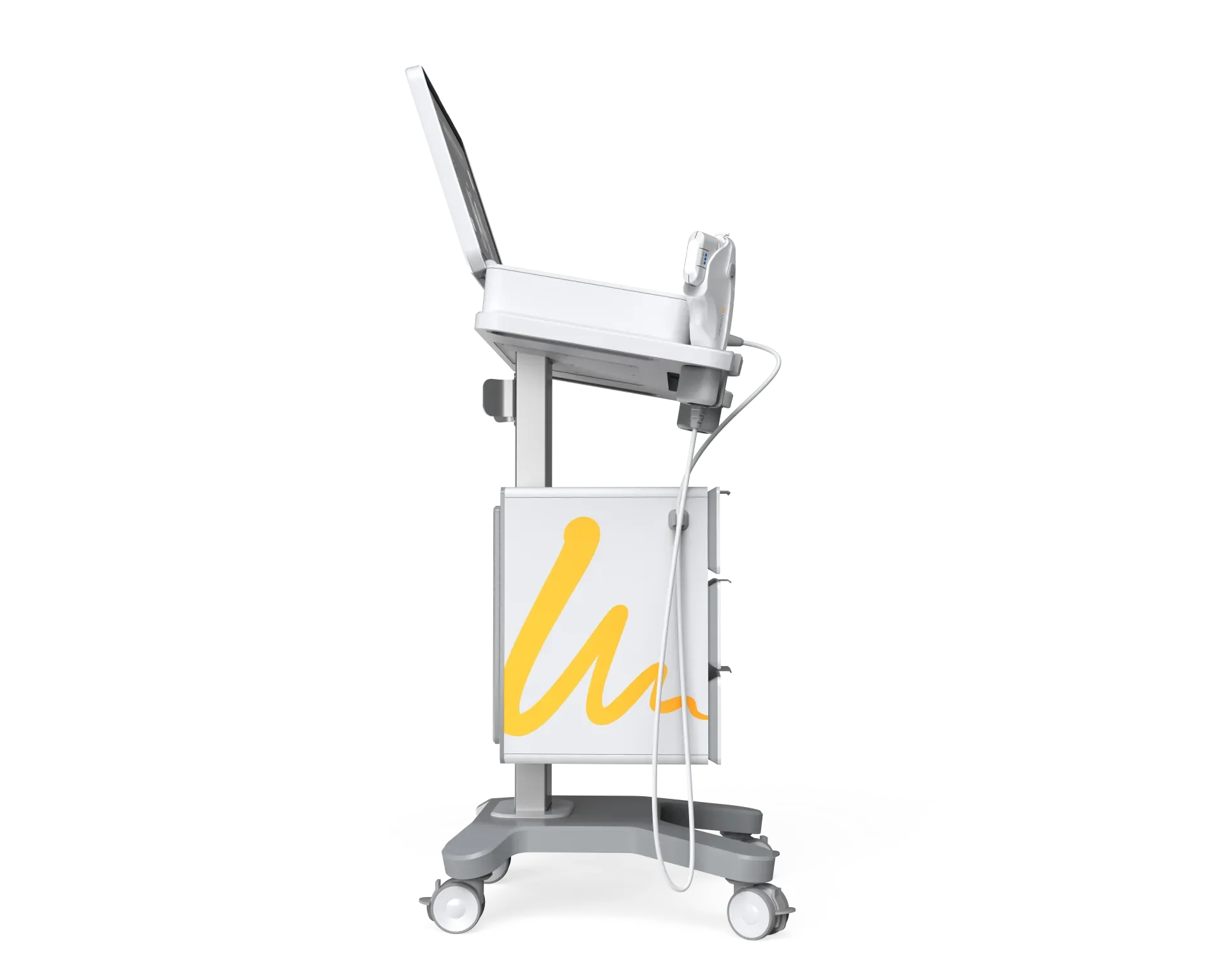
Thermage FLX is a monopolar radiofrequency platform manufactured by Solta Medical, used to deliver controlled volumetric heating to the deeper dermis and subcutaneous layer for collagen stimulation and tissue tightening. The FLX generation introduced the AccuREP algorithm — automatic real-time adjustment of energy delivery based on tissue impedance — alongside a 4.0 cm² treatment tip that delivers a faster, more comfortable session than predecessor systems. For an international visitor, Thermage FLX is, alongside Ultherapy PRIME and Sofwave, among the most schedulable platforms in the Korean menu — a single full-face session fits a four-day trip with minimal social downtime. This page covers the platform from a visitor's angle. For deeper clinic-level coverage, see the Korea-wide Thermage archive or the Myeongdong-specific archive.
What changed in the FLX generation
The FLX generation introduced three meaningful improvements over the predecessor Thermage CPT. The AccuREP algorithm reads tissue impedance per shot and adjusts energy in real time, which improves consistency and reduces the operator-skill variance that affected older Thermage outcomes. The 4.0 cm² tip is larger than the CPT tip, delivering more area per shot and shortening session time. And the Total Tip 4.0 system standardised treatment counts (typically 900 shots for a full face) for protocol consistency across clinics. The clinical fundamentals — volumetric monopolar RF heating at 3 to 5 mm depths, stimulating collagen response over eight to twelve weeks — remain the same as earlier Thermage generations.
Visitor scheduling
A full-face Thermage FLX session takes 45 to 75 minutes (faster than the CPT generation), with topical anaesthesia applied 30 minutes before. The conventional visitor pattern: arrive Friday, consultation Friday afternoon, treatment Saturday, observe Sunday, fly home Monday. Mild redness for 24 to 48 hours is common; localised swelling at higher energy settings can extend that to three to four days. Most visitors return to normal social activity by day two. The platform combines well with Ultherapy PRIME on the same trip, sequenced 48 to 72 hours apart, and with regenerative boosters in the same window.
Thermage FLX vs Ultherapy PRIME — visitor's framing
Both platforms target similar clinical goals (lifting and tightening) through different physical mechanisms. Ultherapy PRIME uses microfocused ultrasound, with thermal coagulation points at discrete depths. Thermage FLX uses monopolar RF, with volumetric heating distributed across a treatment area. In practice, the two platforms are complementary rather than competitive — many visitors who can tolerate a single platform get a meaningful result, but visitors with both surface laxity and deeper structural concerns often benefit from sequencing both across two trips. The senior physician should advise. Visitors choosing one only on cost grounds should know that pricing is similar in the premium Gangnam range, with regional clinics in Myeongdong, Busan, and Jeju sometimes offering more accessible price-points.
What the platform does and does not do
Thermage FLX delivers collagen-mediated tightening with full effect emerging across two to three months. The platform is well-evidenced for the lower face, neck, and brow indications. Body indications (abdomen, arms, thighs) exist with the larger Body tips and are growing in popularity. What FLX does not do: it is not a surgical face-lift, it does not address volume loss, and the lifting effect on heavy structural ptosis is limited compared with surgical options. Visitors with realistic expectations — gradual tightening, structural improvement, no dramatic same-day transformation — are typically satisfied. Heavy-skinned patients with significant excess tissue may find the result less visible than they hoped.
Pricing context
A full-face Thermage FLX session in Gangnam typically lands in the KRW 1,500,000–3,500,000 range, with body indications priced separately. Tip count (900 shots is the standard full-face count) and clinic positioning drive the variance. Myeongdong and Busan clinics often run lower price-points, sometimes substantially so. The pricing reference has current figures with USD, CNY, JPY, and EUR conversions. Always confirm the named tip and shot count before booking — a clinic that quotes 'Thermage' without specifying FLX is not transparent about platform generation, which is a meaningful detail.
Frequently asked questions
Is Thermage FLX different from older Thermage?
Yes. FLX introduced the AccuREP algorithm (real-time energy adjustment), a 4.0 cm² tip, and faster session times. Most premium Korean clinics now run FLX; some regional clinics still operate the predecessor Thermage CPT, which is mechanistically similar but operator-skill-dependent.
How long is a session?
45 to 75 minutes for a full face on the FLX system, with 30 minutes of topical anaesthesia beforehand. Body indications take longer.
How much downtime?
Mild redness for 24 to 48 hours; localised swelling can extend to three to four days at higher energy settings. Most visitors return to normal activity by day two and to strenuous exercise by week two.
When do results appear?
Initial tightening at four to six weeks; full collagen response at three months. Photo-documentation at week 0, week 4, and week 12 is the standard review pattern at clinics that take the protocol seriously.
Can I do Thermage FLX and Ultherapy PRIME on the same trip?
Yes, with sequencing. Conventional pattern: one platform on day one, the other 48 to 72 hours later, with the senior physician planning the order based on the patient's clinical concerns. Both same-day is generally not done.
What does a full-face session cost?
KRW 1,500,000 to 3,500,000 in Gangnam, depending on tip count and clinic. The pricing reference has current figures with USD, CNY, JPY, and EUR conversions.