Treatment Guide
Post-procedure flying rules — how soon can you fly home after Korean treatment
Cabin pressure, dry air, and minimum wait times by treatment — what visitors flying out of Incheon and Gimpo need to know after Ultherapy PRIME, Thermage FLX, Sofwave, regenerative IV protocols, and thread lift.
The cabin environment on a commercial flight is meaningfully different from sea-level baseline — cabin pressure is held at the equivalent of 6,000 to 8,000 feet of altitude, cabin humidity drops to 10 to 20 percent (compared with 40 to 60 percent at ground level), and the visitor sits relatively immobile for long stretches with reduced circulation to the legs. For most non-invasive aesthetic and regenerative platforms used in Korean medical tourism, these conditions are tolerable within the standard 24-hour observation window after treatment. For a small number of platforms — primarily thread lift, certain higher-energy radiofrequency settings, and surgical work that this handbook does not cover — the cabin environment interacts unfavourably with the early recovery, and the minimum ground-time window is longer than visitors typically realise. This page walks through the minimum wait times by treatment platform, what the underlying physiology actually is, and how to plan the return flight in service of the recovery rather than against it. The guidance below is platform-general; specific clinic aftercare protocols — written in the patient's working language, with a 14-day coordinator channel for follow-up questions — govern the individual case. If your clinic's protocol diverges from what is here, follow the clinic's protocol, and ask the senior physician to explain the divergence in writing.
Cabin pressure and dry air — what actually changes in the cabin
At cruise altitude, commercial-aircraft cabins are pressurised to the equivalent of 6,000 to 8,000 feet — roughly the elevation of a high mountain town. Atmospheric pressure at that effective altitude is around 75 percent of sea level, which translates to a 3 to 4 percent drop in arterial oxygen saturation for the typical healthy passenger. For the well-adjusted patient post non-invasive procedure, this drop is biologically trivial. The cabin humidity drop is more practically relevant — at 10 to 20 percent relative humidity, the skin loses transepidermal water faster than at sea level, which can amplify the visible dryness and tightness that some patients feel in the first 24 to 72 hours after energy-based treatment. The third cabin factor is relative immobility — long-haul flights involve four to twelve hours of seated near-immobility, with reduced circulation to the lower limbs and the treatment area. None of the three factors are individually disqualifying for the standard non-invasive aesthetic procedures; the interaction matters more for surgical work and thread lift, where the early healing window has structural integrity considerations that the cabin environment can compromise.
Microfocused ultrasound (Ultherapy PRIME) — same-day or next-day flying
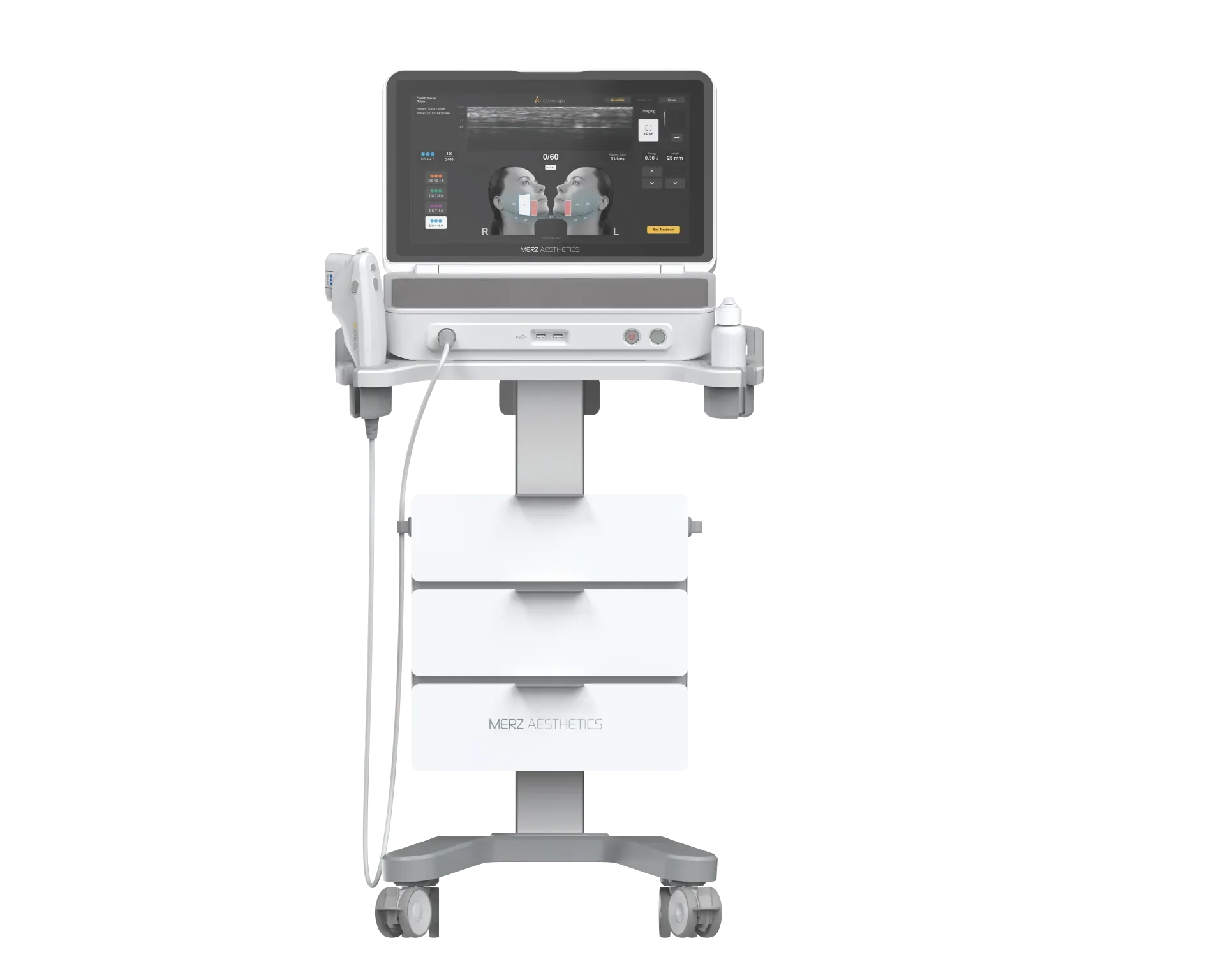
Microfocused ultrasound platforms — Ultherapy and the current-generation Ultherapy PRIME — deliver focused thermal coagulation at controlled depths (1.5, 3.0, and 4.5 millimetres) in the dermis and SMAS layer, stimulating collagen response over the following eight to twelve weeks. The immediate post-procedure presentation is mild-to-moderate redness, mild tenderness on touch, and occasional small surface marks at the transducer contact points; visible swelling is uncommon and not socially disabling. The platform tolerates same-day or next-day flying without issue. Cabin pressure does not interact with the deep thermal coagulation points in a clinically meaningful way; the cabin-air dryness is the more practical concern, and a hydrating mist plus barrier moisturiser through the flight manages it adequately. The conventional pattern for Ultherapy PRIME visitors is Friday consultation, Saturday treatment, Sunday observation, Monday return flight — comfortable inside a four-day trip with no flying-related downside. For visitors who specifically want a 48-hour buffer, the longer trip pattern is fine, but it is not required by the platform's physiology. For deeper context see the Ultherapy PRIME guide.
Radiofrequency (Thermage FLX) — next-day flying with hydration caveat
Thermage FLX delivers monopolar radiofrequency energy through a contact tip in a sequenced shot pattern across the treatment area, with bulk heating of the dermis and subcutaneous tissue triggering immediate collagen contraction and a longer collagen-formation response. Immediate post-procedure presentation is mild-to-moderate warmth and redness, occasional mild swelling, and tenderness on touch for 24 to 48 hours. The platform tolerates next-day flying without significant issue for the standard energy settings. For aggressive higher-energy protocols — some operators deliver Thermage FLX at the upper end of the manufacturer's recommended energy range, particularly for visitors specifically wanting maximum effect from a single session — the post-procedure inflammatory load is higher, and a 48-hour ground-time window is the more conservative choice. Cabin dryness is the practical recovery-window concern; treated skin sometimes feels tighter and drier in the cabin than it does at sea level, and a barrier moisturiser plus regular hydration sips through the flight materially improve the experience. For deeper context see the Thermage FLX guide.
Ultrasound tightening (Sofwave) — same-day flying tolerated
Sofwave is the Synchronous Ultrasound Parallel Beam (SUPERB) platform, a different ultrasound technology from microfocused ultrasound, delivering parallel-beam energy at a single mid-dermal depth (1.5 millimetres) across a series of contact zones. The platform's session time is short — 30 to 45 minutes for full face — and the immediate post-procedure presentation is mild redness lasting one to two hours and minor surface marks that resolve within 24 hours. Sofwave is among the most cabin-friendly platforms in the Korean menu — same-day flying is well-tolerated, with no meaningful interaction between cabin pressure or cabin dryness and the procedure's recovery. The conventional pattern for Sofwave visitors is a tighter trip than for the deeper-energy platforms: morning consultation, afternoon treatment, evening flight is technically workable, though most clinics suggest a one-night buffer for visitor comfort rather than for platform requirement. For deeper context see the Sofwave guide.
Regenerative IV protocols (stem cell, exosomes) — same-day flying with hydration
Regenerative IV protocols — autologous adipose stem cell infusion, exosome IV, growth-factor protocols — typically present with mild puncture-site tenderness and occasional warmth or mild flush for the first 12 to 24 hours. The platform tolerates same-day flying without issue. The practical concerns are hydration (the cabin's low humidity adds to whatever fluid load the protocol delivered) and circulation (the relative immobility on a long-haul flight is the main consideration for visitors who received a higher-volume IV programme). The conventional pattern for IV regenerative visitors is treatment morning, three-hour observation, evening flight — workable for short-haul and acceptable for long-haul. For multi-session regenerative programmes — typically two or three sessions across a week-long trip — flying between sessions is tolerated but not optimal; the better protocol is to complete the planned sessions before the return flight rather than fly home and back. For deeper context see the stem cell guide. The Korea-wide stem-cell archive carries clinic-by-clinic detail on the multi-session protocols and trip-window planning.
Thread lift — 48 to 72 hours minimum on the ground
Thread lift is the platform where the cabin environment matters most, and where visitors most commonly under-plan the post-procedure window. The procedure involves inserting absorbable threads (typically polydioxanone or poly-L-lactic acid) through small entry points and anchoring them under tension to lift the soft tissue. The immediate post-procedure window has three structural-integrity issues that the cabin environment can compromise. First, the thread anchor points are still settling under the lift tension across the first 24 to 72 hours; cabin pressure changes during ascent and descent can occasionally trigger micro-displacement at these anchor points if flying happens too early. Second, the bruising and swelling pattern is more pronounced than for energy-based platforms, and cabin-air dryness amplifies the visible discomfort meaningfully. Third, the seated immobility on a long-haul flight is awkward for visitors whose facial soft-tissue is in early structural recovery. The minimum ground-time window for thread lift is 48 hours; the conservative recommendation from senior practitioners is 72 hours, and visitors who can afford the longer trip should plan for it. For visitors who specifically need to fly home within 48 hours of a thread lift, the senior physician should be aware before the procedure is scheduled, and the trip window should be adjusted (either by moving the procedure earlier or by extending the ground time). See the thread lift guide for the full recovery framework.
Multi-platform combination trips — sequencing for the return flight
Most international visitors who travel for medical tourism in Korea book multiple platforms across a single trip, and the return-flight window is set by the latest and most restrictive procedure in the schedule. The conventional sequencing rule: energy-based platforms (Ultherapy PRIME, Thermage FLX, Sofwave) and regenerative IV protocols first, thread lift last only if the trip window allows the 48 to 72 hours of ground time afterward. Visitors who sequence thread lift early and an energy platform late often run into the problem of the thread lift's structural-integrity window still being open at the return flight; the better pattern is to either (a) put thread lift first with the full ground time before the next procedure and before the return flight, or (b) skip thread lift on a tight trip window. For visitors on a four-night trip pattern, the practical sequence is: night one arrival, day one consultation, day two energy-based platform, day three regenerative IV (48 to 72 hours after energy), day four return flight. For visitors who specifically want to add thread lift, the trip extends to six or seven nights to accommodate the structural-integrity window before flying.
Hydration, deep-vein thrombosis, and the long-haul return leg
For the long-haul return flight to North America (12 to 14 hours) or Europe (10 to 11 hours), two concerns sit on top of the procedure-specific window. First, hydration: the cabin's low humidity combined with the typical alcohol-and-coffee consumption produces meaningful dehydration, which interacts unfavourably with recovery from any platform but particularly with energy-based work where skin barrier function is part of the response. The practical answer is regular water intake every 60 to 90 minutes, skip the alcohol and limit caffeine, and apply a barrier moisturiser at hourly intervals during waking flight hours. Second, deep-vein thrombosis risk: long-haul seated immobility increases DVT risk modestly for any passenger, and visitors who received an IV protocol with significant volume should discuss compression stockings and aisle-walking frequency with the treating physician before the return flight. For visitors with personal or family DVT history, this is the consultation question to ask at the pre-procedure visit, not at the airport. Published authority guidance from the Ministry of Health and Welfare covers the medical-tourism patient safety framework, including post-procedure travel guidance for higher-risk cohorts.
Frequently asked questions
How soon after a non-invasive aesthetic procedure in Korea can I fly home?
For most non-invasive platforms — microfocused ultrasound, radiofrequency at standard settings, ultrasound tightening, regenerative IV protocols — same-day or next-day flying is well-tolerated. The conventional pattern is treatment day, 24-hour observation, next-day return flight. For aggressive higher-energy radiofrequency settings, a 48-hour buffer is the more conservative choice.
What is the minimum wait time for flying after a thread lift?
48 hours minimum; 72 hours is the conservative recommendation from senior practitioners. The structural settling at the thread anchor points happens across the first 24 to 72 hours, and cabin pressure changes during ascent and descent can occasionally trigger micro-displacement at the anchor points if flying happens too early. Visitors who specifically need to fly home faster than 48 hours after a thread lift should reconsider whether the procedure fits their trip window.
Does cabin pressure affect my aesthetic treatment results?
For energy-based platforms (microfocused ultrasound, radiofrequency, ultrasound tightening) and regenerative IV protocols, cabin pressure does not meaningfully affect outcomes. The cabin-air dryness is the more practical recovery-window concern, and it is manageable with hydration and barrier moisturiser. For thread lift, cabin pressure changes during ascent and descent can interact with the early structural-integrity window — which is why the 48 to 72 hour minimum applies.
Should I tell the airline I had a medical procedure before flying?
For routine non-invasive aesthetic procedures, no — there is no airline-side requirement and no practical benefit. For surgical procedures (which this handbook does not focus on), a clearance letter from the operating physician is sometimes requested by the airline, particularly for long-haul routings, and the longer post-procedure window (typically 7 to 14 days for facial surgery, longer for body surgery) governs the timing rather than airline policy. Carry written aftercare instructions in your hand luggage regardless of procedure.
Can I fly with visible bruising or swelling after my procedure?
Yes, with the caveat that visible bruising and swelling are unflattering at the immigration desk and on the customs queue, and visitors who care about that should plan an extra ground day before the return flight. The bruising itself does not interact with cabin conditions in a clinically significant way for the standard platforms. For procedures that produce significant visible bruising (thread lift, aggressive thermage settings), the 48 to 72 hour ground window allows the most pronounced bruising to settle before the return flight regardless of whether the airline cares.
What should I bring in my hand luggage for the return flight?
Written aftercare instructions from the clinic, the clinic's coordinator channel contact details (WhatsApp, LINE, WeChat) for in-flight or post-arrival questions, a small barrier moisturiser (under 100 ml for security), a hydrating face mist (also under 100 ml), basic analgesia for any post-procedure tenderness (verify allowed quantities), and bottled water purchased airside. Visitors who received an IV protocol should also carry the prescription documentation in case immigration on the home side asks about medical equipment or supplies.
What if I experience an unexpected reaction during or after the flight?
Mild discomfort, redness, or visible dryness during the flight — manage with hydration and barrier moisturiser, contact the clinic via the coordinator channel after landing for advice if anything seems unusual. Significant pain, fever, expanding swelling, severe asymmetry, or any sign of true infection — present at your local hospital or trusted home physician immediately on landing, and contact the Korean clinic in parallel. Do not delay urgent care because you are uncertain whether the issue is procedure-related; trust your local emergency physician on the urgent question, and the Korean clinic on the procedure-specific question.
Is the 48-hour rule for thread lift the same for all thread types?
Approximately, yes. The 48 to 72 hour minimum applies to standard absorbable thread lifts (PDO, PLLA, PCL) regardless of brand and regardless of whether the threads are barbed or smooth. For experimental or non-standard thread products, the senior physician's specific instructions govern; ask at the consultation. Higher-volume thread procedures (more threads, more anchor points) sometimes carry a longer post-procedure ground-time window than the 48 to 72 hour baseline.