Editorial Picks
7 traditional markets in Seoul worth exploring
From the 1414-founded central complex to the Netflix-featured food alleys — a Visit Korea Medical Editorial Board shortlist for international visitors with a free afternoon.
Seoul's traditional markets are the most efficient way for an international visitor to encounter Korean street food, regional specialty produce, and the texture of pre-mall city life in a single contained outing. Unlike the city's department-store basement food halls — which are easier to navigate but visually homogenised — the traditional markets retain distinct historical identities: Namdaemun has been at the same location since 1414, Gwangjang has been Korea's oldest permanent market since 1905, and the smaller neighbourhood markets such as Mangwon and Tongin each carry a sub-cultural signature. The Visit Korea Medical editorial team selected the seven entries below for their operational verification, language accessibility, and pairing potential with a typical four-to-seven-day medical-tourism itinerary. The selection excludes several composite or wholesale-only markets that appear on outdated lists but do not serve a visitor experience well. For the parallel traditional restaurants list, see our restaurants guide.
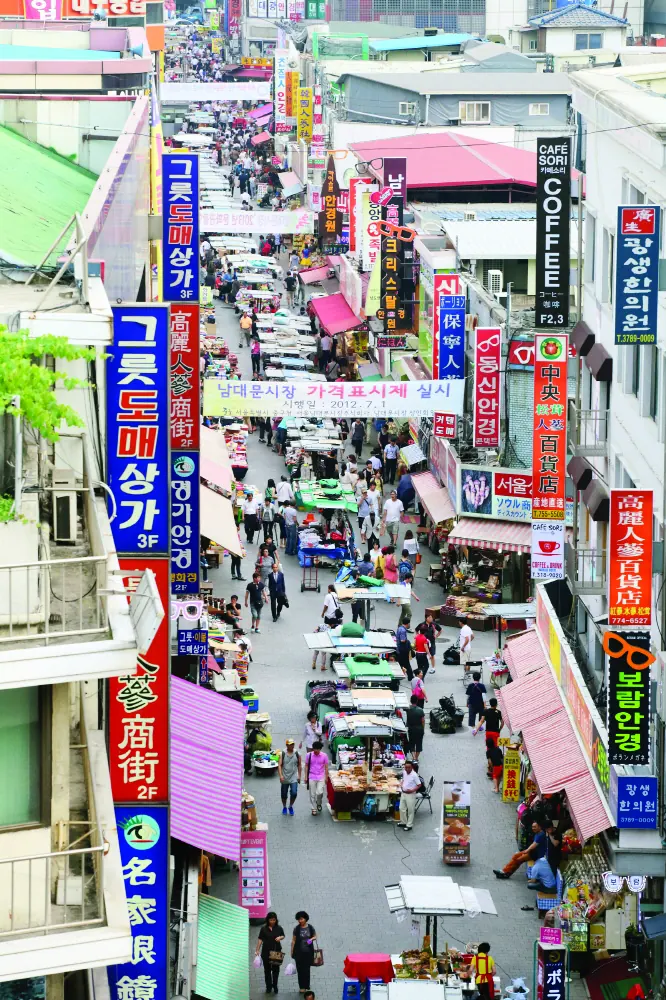
Featured A — Gwangjang Market (Korea's oldest permanent market, 1905)
Gwangjang Market at 88 Changgyeonggung-ro, Jongno-gu, opened in 1905 as Korea's first permanent market and has run continuously since, surviving Japanese colonial-era restructuring, the Korean War, and several waves of urban-renewal pressure that displaced many of its contemporary commercial districts. The market is structured in two layers: a textile and traditional-garment wholesale floor (open 09:00 to 19:00, primarily wholesale-oriented but visitor-accessible) and the now-iconic food alley (open 09:00 to 23:00, peak from 17:00). The food alley is the destination — Netflix's Street Food: Asia featured Gwangjang prominently in its 2019 inaugural-season Seoul episode and the dishes that emerged from this episode are still the canonical ones to try: bindaetteok (mung-bean pancake, served sizzling hot from large griddles where the cooks pour the batter and turn the pancakes in front of seated customers), yukhoe (raw beef tartare with sesame oil, raw egg yolk, pear julienne, and toasted seeds), and mayak gimbap (small, finger-sized rice rolls served with a mustard-based dipping sauce; the name translates as 'narcotic' rice rolls and refers to their addictive quality). The food alley also carries strong representation of mung-bean jelly (nokdumuk-muchim), pork-blood sausage (sundae), and a range of Korean liquor counters serving makgeolli (rice wine) by the kettle and soju by the bottle. Price per dish runs roughly KRW 5,000 to KRW 30,000. English, Mandarin, and Japanese signage is widespread; English-capable vendors operate at the major food stalls and the bindaetteok and yukhoe rows in particular have multilingual menus and credit-card-capable payment. The market is one subway stop from the central tourist quarter on Seoul Metro Line 1 to Jongno 5-ga Station, exit 7, with the food alley entrance directly visible across the road. For first-time visitors, the editorial recommendation is to arrive at 17:00 when the alley transitions from afternoon retail to evening street food and to sample a small portion at three or four stalls rather than committing to a full meal at one.
Featured B — Namdaemun Market (1414-founded, largest by stall count)
Namdaemun Market at 21 Namdaemunsijang 4-gil, Jung-gu, is Korea's largest traditional market by stall count and one of its oldest, dating to 1414. The market sits inside the historical Namdaemun (Great South Gate) district that gives it its name, a few hundred metres from the Sungnyemun gate itself (Korea's National Treasure No. 1) that anchored the southern wall of the Joseon-period Seoul fortifications. The market is structurally a labyrinth: hundreds of small shops organised into informal alleys with thematic specialties — kalguksu alley for hand-cut noodle soup served at counter stools with shared communal seating, galchi (cutlassfish) alley for grilled fish lunch sets that have become a viral tourist destination in their own right, accessory alleys for stationery and household items, and a wholesale ginseng strip with multilingual support oriented toward tourist purchase. The market also houses one of the larger wholesale children's-clothing complexes in Korea, although that section operates on different visitor logic. Many shops run a 23:00 to 15:00 schedule, which is unusual for visitors — the wholesale character of the market means early-morning hours are part of the normal rhythm, particularly in the textile, accessory, and produce sections where afternoon visits encounter many closed shutters. The food alleys and retail sections oriented to tourist visitors run more conventional 08:00 to 18:00 hours. Walking distance from the central tourist quarter is approximately five minutes; the market gates anchor directly at Hoehyeon Station (Seoul Metro Line 4, exit 5). English, Japanese, and Mandarin signage is available at the major entrances and on multilingual leaflets distributed at the information desk. Price per food dish is roughly KRW 5,000 to KRW 15,000; retail items run KRW 5,000 to KRW 50,000 depending on category. For first-time visitors, this is the standard introductory market — the combination of historical depth, central location, and a wide enough mix of food, retail, and ginseng purchase that visitors can structure their own ninety-minute exploration around their priorities.
Featured C — Tongin Market (brass-coin lunchbox system)
Tongin Market at 18 Jahamun-ro 15-gil, Jongno-gu, in the Seochon neighbourhood west of Gyeongbokgung Palace, runs the only brass-coin lunchbox system among Seoul's traditional markets. The format was introduced as a Seoul Metropolitan Government revitalisation programme to bring foot traffic into a neighbourhood market that was losing customers to nearby department-store food halls, and the system has since become one of the most distinctive small-market experiences in the city. Visitors exchange Korean won for old-style brass coins at a central counter (the Doshirak Cafe office), then carry a wooden lunch tray through the market and use the coins as a token currency to assemble a custom Korean banchan (side-dish) lunch from participating vendors. Each vendor displays a small price-in-coins indicator above their offerings, allowing visitors to budget across the tray and try multiple items rather than committing to one full meal. The Doshirak Cafe coin programme runs 11:00 to 16:00 (Monday closed) and the broader market runs 07:00 to 21:00 for general retail. The lunchbox typically costs roughly KRW 5,000 to KRW 10,000 in coins for a full tray. The format is genuinely interactive — visitors choose from kimbap (rice rolls), jeon (pan-fried fritters), seasonal banchan, glazed root vegetables, rolled omelette, marinated tofu, sweet rice balls, and a rotating set of seasonal preparations — and produces a customised plate that no central kitchen would assemble for you. After the tray is assembled, visitors return to the Doshirak Cafe seating area to eat, with rice, soup, and tea provided as part of the coin-system service. English signage is available throughout the market and at the central counter. The Seochon location is ten minutes on foot from Gyeongbokgung Palace, which means the market pairs naturally with a half-day palace and Bukchon itinerary, or with a continuation walk through the Seochon residential alleys, which carry one of the more intact pre-development neighbourhood textures in central Seoul. For visitors who want a market experience that includes active participation rather than passive ordering, Tongin is the editorial recommendation.
Featured D — Mangwon Market (younger-neighbourhood food market)
Mangwon Market at 14 Poeun-ro 8-gil, Mapo-gu, in the Mangwon-dong neighbourhood north of the Han River, is the editorial pick for visitors who want a less-touristed traditional-market experience and who already have a Gwangjang or Namdaemun visit on their itinerary. The market caters primarily to a local twenties-to-thirties demographic — the surrounding neighbourhood has become one of the more popular residential pockets for younger Seoulites priced out of the central Hongdae and Yeonnam districts — and the food character reflects that. The stall mix carries gangjeong (sweet glazed fried chicken bites in small portion sizes designed for walking-eating), jeon (pan-fried fritters in a wide range of vegetable and seafood preparations), kkochi (skewered grilled snacks ranging from sweet rice cakes to grilled meat), tteokbokki (spicy rice cake), sundae (Korean blood sausage), and inexpensive single-person rice meals at small storefronts. There is also a strong representation of bakeries, dessert stalls, and one or two specialty coffee counters that have arrived in the past few years as the neighbourhood gentrified slightly. Hours are 09:00 to 21:00 for most stalls, with the evening peak from 18:00 to 21:00 when local residents pick up dinner items on their way home from work. Price per dish runs roughly KRW 3,000 to KRW 15,000, noticeably below tourist-market pricing and reflecting a market that is still primarily serving its own neighbourhood rather than catering to international visitors. English signage is available at most stalls but is less consistent than at the central tourist markets — visitors should be prepared to point at items and use card or cash. The market sits a ten-minute walk from Mangwon Hangang Park, which is one of the better Han River park sections — visitors typically combine an afternoon market visit with an early-evening river walk along the Mapo-gu riverfront, picking up food at the market and eating it on the riverside benches. The Mapo-gu location is one subway stop from Hongdae on Seoul Metro Line 6 (Mangwon Station, exit 2), which makes the trip an easy half-day add-on to a Hongdae itinerary.
Featured E — Noryangjin Fish Market (24-hour seafood)
Noryangjin Fish Market at 674 Nodeul-ro, Dongjak-gu, is Korea's largest fish market and the most accessible seafood experience for international visitors in Seoul. The market relocated in 2016 from its long-running ground-level site to a modern multi-storey complex with covered wet-market floors and dedicated upstairs restaurant floors. The structure has divided opinion among long-time Korean food media — the new building is more sanitary, multilingual, and weather-proofed but is sometimes described as less atmospheric than the original. For international visitors, the new building is the easier and more navigable destination. The market runs 24 hours, with live-fish auctions in the early-morning window (typically 01:00 to 04:00) for industry buyers and the visitor-friendly retail and restaurant floors operating throughout the day, peaking at lunch and dinner. The standard format is buy-and-cook: visitors pick a fish, octopus, abalone, or king crab from the ground-floor wet market, agree a price with the vendor, then carry the catch to a second-floor restaurant where staff prepare the sashimi (raw slices), cooked accompaniments (steamed crab, grilled fish head, spicy maeuntang soup), and serve a full set with banchan and rice for a separate per-person service fee that typically runs KRW 10,000 to KRW 15,000. Pricing is at market rate for the fish; total restaurant preparation including the catch typically runs KRW 30,000 to KRW 100,000 per person depending on the catch chosen, with king crab and large flatfish at the higher end and conventional sashimi cuts at the lower end. English, Japanese, and Mandarin support varies by stall — the larger and more visible vendors carry full multilingual menus and English-capable staff, while smaller specialist vendors operate primarily in Korean. The market is one subway stop from central Seoul on Seoul Metro Line 1 to Noryangjin Station, exit 1, with an enclosed walkway connecting the station directly to the market building. For visitors travelling with a group of three or more, the buy-and-cook format becomes meaningfully cost-effective and produces a memorable shared meal; for solo visitors, the dedicated sashimi sets at the second-floor restaurants are simpler and run KRW 25,000 to KRW 50,000 per person.
Featured F — Gyeongdong Market (herbal medicine and ginseng)
Gyeongdong Market at 20 Wangsan-ro, Dongdaemun-gu, is Korea's largest traditional herbal-medicine market and the destination for visitors interested in Korean medicinal-herb culture, dried ginseng, and traditional remedy ingredients. The market's identity is shaped by its proximity to the historical Korean medicine teaching institutions and to the city's largest concentration of traditional-medicine practitioners; many of the herbalists trading at Gyeongdong supply directly to clinical Korean-medicine doctors as well as to retail customers. The market floors are organised by category — dried herbs in transparent plastic bags labelled in Korean (visitors should ask staff for English identification, particularly for tea-grade herbs), ginseng in fresh, dried, and red preparations sorted by age class (four-year, six-year), wild roots and bark, dried mushrooms including pine mushrooms (songi) and reishi, and a parallel produce section that handles fresh-market vegetables and fruits in addition to the medicinal-herb specialty. The pricing structure is typically wholesale-grade but most vendors are open to retail purchase as well, although the minimum unit sizes can be larger than visitors expect — a typical ginseng-root purchase is by gram, with a standard tourist-size purchase running approximately KRW 50,000 to KRW 150,000. Hours are roughly 08:00 to 19:00 with variation across stalls; Korean is the primary working language, with English signage at the main entrances and increasingly at the larger ginseng-oriented vendors. The market complex includes a recently renovated heritage Starbucks branch — built into a converted old theatre, with the original ceiling architecture and balcony seating preserved — which has become an unexpected destination for design-aware visitors and for travel publications covering Seoul's heritage-architecture conversions. The market is approximately fifteen minutes by taxi from the central tourist quarter or accessible by Seoul Metro Line 1 to Jegi-dong Station, exit 2. For visitors with an interest in traditional Korean medicine, who want to bring back dried ginseng as a Korea-specific souvenir, or who simply want to see a market that operates outside the tourist circuit, this is the editorial recommendation.
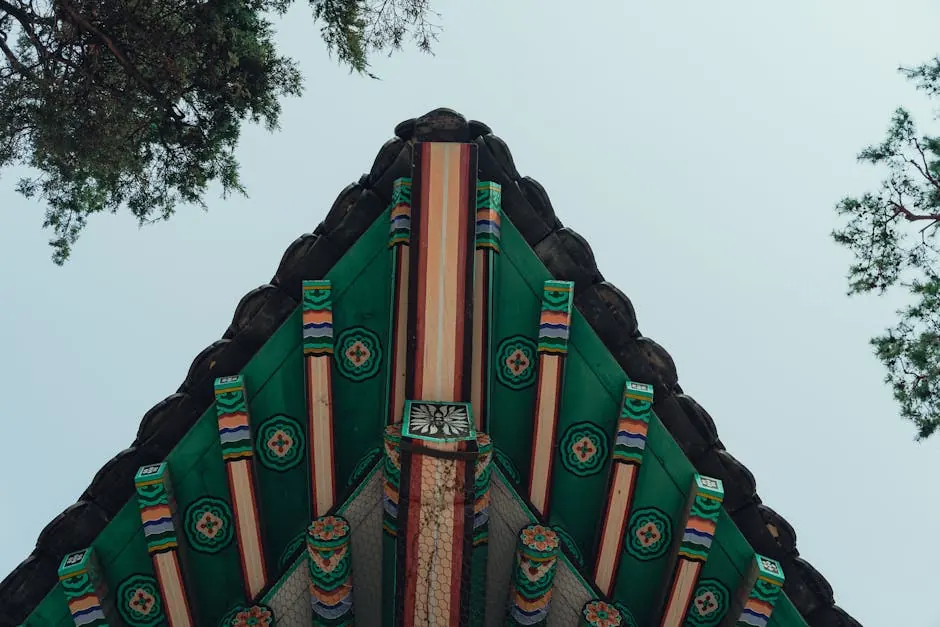
Featured G — Insadong Antique and Craft Market
The Insadong antique and craft market runs along Insadong-gil, Jongno-gu, and is technically a concentrated district of traditional-craft shops, calligraphy studios, antique dealers, ceramics galleries, traditional-tea houses, and souvenir vendors rather than a single market hall. The district's identity was formed in the post-1945 period when displaced antique dealers from northern Seoul and from the dissolving Japanese-colonial-era commercial districts consolidated their businesses along this single pedestrian street; the district has since been protected by Seoul Metropolitan Government zoning that prevents incompatible large-format retail from entering. The format works particularly well for visitors — the entire main street is walkable in under an hour, English, Japanese, and Mandarin signage is widespread, and price points span from inexpensive souvenirs (traditional hanji paper crafts, small ceramic dishes, hanbok-themed accessories at KRW 5,000 to KRW 30,000) to serious antique purchases (Joseon-period ceramics, traditional furniture, calligraphy works) that run into millions of Korean won at the upper end. The major Ssamzigil multi-storey craft mall sits halfway down the main street and houses one of the city's better-curated concentrations of independent Korean designer-craft brands, with rotating exhibitions on its upper floors. Hours run roughly 10:00 to 21:00 with variation by individual shop; weekends are busier and the main street is closed to vehicle traffic on Saturdays and Sundays. The district pairs naturally with Sanchon temple cuisine (on the same street) and with a Gyeongbokgung Palace visit; visitors typically build a half-day Insadong-and-palace combination around this area. The district also carries one of the larger concentrations of traditional Korean tea houses in Seoul, with multiple options offering a quiet thirty-minute tea break in the middle of an Insadong walk. For visitors who want a traditional-style souvenir purchase or who are interested in Korean calligraphy, ceramics, or hanbok specifically, Insadong is the editorial recommendation and the most efficient single-district stop in the city. The area is two subway stops from the central tourist quarter on Seoul Metro Line 3 to Anguk Station, exit 6, or one short taxi ride.
How we selected this list — editorial methodology
The Visit Korea Medical editorial team built this list by cross-checking against the Korea Tourism Organization's official market directory at english.visitkorea.or.kr, the Seoul Metropolitan Government's tourism portal at english.seoul.go.kr, and recent operational verification via Tripadvisor and Naver Place activity within the last sixty days. We excluded several composite market entries that appear on outdated lists — bundled wholesale clusters that conflate three or four distinct markets into one entry, and specialty wholesale markets without a visitor-facing retail experience. We did not include the Dongdaemun fashion wholesale district (which functions primarily as a late-night fashion-buying complex rather than a traditional market) or specialty supply markets oriented to home bakers and craft hobbyists. We also did not include the Joongbu (Jung-gu dried-seafood specialist) and Pyeonghwa (Dongdaemun fashion-wholesale) markets as standalone entries, on the assessment that their visitor experience is significantly narrower than the seven markets we have selected and that they appear on tourist lists more from name recognition than visitor utility. The seven entries here all maintain a visitor-friendly retail layer with multilingual signage and walkable layouts. We do not publish numerical rankings; the alphabetical Featured A through G ordering is editorial, not preference-based. The list is updated quarterly by our editorial team based on operational verification and visitor feedback received via our editorial contact form.
How market shopping etiquette works in Seoul
Korean traditional markets operate under a slightly different commercial logic from supermarkets or department stores and visitors benefit from understanding the basic conventions. First, light bargaining is acceptable on bulk produce, dried herbs, and high-volume retail purchases at wholesale-oriented vendors but is not appropriate at the food-alley stalls where prices are posted and turnover is fast. Second, sampling is widespread — many vendors will offer small tastes of ginseng tea, jeon, or kimchi as a customer-engagement gesture, and accepting a sample does not obligate purchase. Third, cash remains preferred at the smaller stalls although credit-card acceptance has expanded significantly since 2020. Visitors should carry both. Fourth, photography is generally welcomed at the food alleys and is part of the market's visitor-facing identity, but the textile, antique, and wholesale-produce sections sometimes have shops where photography is not appreciated; visitors should ask before photographing inside a specific shop. Fifth, the bigger markets (Gwangjang, Namdaemun, Gyeongdong) have information desks at the main entrances with English-speaking staff who can answer logistical questions, hand out leaflets, and provide basic directions. Sixth, the markets generally close down by 22:00 even when individual stalls are listed with later hours; visitors should aim to complete substantial visits by 21:00 to avoid arriving when major sections are already shutting.
Fitting a market visit into a treatment trip
Most international visitors travelling to Seoul for a four-to-seven-day medical-tourism trip have one to two free half-days for cultural exploration. Our editorial recommendation for first-time visitors is to choose one major market (Gwangjang or Namdaemun) as the introductory stop and pair it with a complementary cultural site within the same neighbourhood — Gwangjang with Insadong galleries, or Namdaemun with the Myeongdong shopping district and a Hadongkwan or Myeongdong Kyoja lunch from our restaurants guide. Visitors with treatments that involve facial swelling, photosensitivity, or post-procedure dietary restrictions should consult the treating clinician's coordinator team about timing — market food can be hot, spicy, or oily in ways that may conflict with certain aftercare protocols, particularly in the first 48 hours after injectable or energy-based treatments where general guidance often includes avoidance of hot food, alcohol, and prolonged sun exposure. The aftercare guide at our aftercare overview carries the general framework, and the trip-planning frame is on the first-time visitor guide. For visitors with mobility concerns, Gwangjang and Namdaemun are the most accessible of the seven markets given their flat layouts and proximity to subway exits with elevators; Mangwon and Gyeongdong involve more walking on uneven surfaces.
Frequently asked questions
Which market is the most visitor-friendly for a first-time international guest?
Namdaemun is the standard introductory stop — it is the easiest to navigate, the most multilingual-signposted, and walking distance from the central tourist quarter. Gwangjang is the food-focused alternative if the visitor's primary interest is street food rather than retail. Both run continuous hours that fit a half-day itinerary.
Are these markets accessible by Seoul Metro?
All seven are metro-accessible. Gwangjang is at Jongno 5-ga Station (Line 1, exit 7), Namdaemun at Hoehyeon Station (Line 4, exit 5), Tongin at Gyeongbokgung Station (Line 3, exit 2), Mangwon at Mangwon Station (Line 6, exit 2), Noryangjin at Noryangjin Station (Line 1, exit 1), Gyeongdong at Jegi-dong Station (Line 1, exit 2), and Insadong at Anguk Station (Line 3, exit 6).
Can I pay with credit card at the markets?
Major vendors at Gwangjang, Namdaemun, Tongin, and the larger Noryangjin restaurants accept credit and debit cards. Smaller stalls often run cash-only or T-money preferred. Bring approximately KRW 50,000 to KRW 100,000 in cash for a typical half-day market visit. ATMs are available at most market entrances.
What is the food-safety standard at the markets?
Korean municipal food-safety standards apply to permanent market stalls and the larger food alley vendors operate under regular health inspection. For visitors with sensitive stomachs, the editorial guidance is to choose stalls with visible cooking surfaces and high turnover rather than pre-prepared static displays. Raw-fish preparation at Noryangjin is conducted under standard restaurant licensing on the second-floor preparation areas.
Which market is the best for buying ginseng or Korean traditional medicine?
Gyeongdong Market is the largest dedicated herbal-medicine market in Korea and the editorial recommendation for ginseng purchase. Wholesale-pricing access is available to retail visitors. For lower-volume gift-size purchases, Namdaemun also carries a ginseng strip with somewhat higher per-unit pricing but easier multilingual support.
What is the brass-coin system at Tongin Market exactly?
Visitors exchange Korean won for old-style brass coins at a central counter inside Tongin Market, then carry a wooden lunch tray and use the coins to buy small portions of banchan (side dishes), kimbap, or jeon from participating market vendors. The format produces a customised lunchbox that no central kitchen would assemble. The programme runs 11:00 to 16:00, Monday closed.
Is Insadong a market or a shopping street?
Insadong is structurally a concentrated district of traditional-craft shops, antique dealers, calligraphy studios, ceramics galleries, and souvenir vendors rather than a single market hall. It functions as a market in the sense that traditional-craft commerce is the main activity, but the visitor experience is a walkable main-street rather than an enclosed market complex.
Where do I find a list of traditional Korean restaurants for the same trip?
The Visit Korea Medical editorial team's parallel list of authentic Korean restaurants is at our restaurants guide. The broader Seoul city itinerary frame is on our Seoul page and the trip-planning guide is at first-time visitor guide.