Editorial Picks
10 authentic Korean restaurants in Seoul every visitor should try
From a 1904 seolleongtang house in Jongno to a Namsan-foothill bibimbap room — an editorial picks list for international visitors with limited days and serious appetites.
International visitors arriving in Seoul for medical or wellness travel almost always carry the same secondary question: where do you actually eat traditional Korean food in a city this large? The honest answer is that Seoul's traditional restaurant scene is structurally different from its trend-driven cafe and Korean barbecue scenes. The benchmarks are old houses — some over a century in continuous operation — that serve a single dish or a tightly defined menu, and the city's most quietly serious restaurants are not the ones with the longest Instagram queues. Visit Korea Medical's editorial team compiled this list across two months of cross-checking against the MICHELIN Guide Seoul, Visit Korea's official directory, and the Seoul Future Heritage register. We have removed several names that appear on outdated lists — restaurants that have lost stars, closed, or relocated without notice — and limited the selection to ten that remain operational and address-verified for visitors travelling in 2026. For visitors planning a four-to-seven-day trip with treatment days mixed in, two to three of these will fit comfortably into the rest-day schedule. For the parallel traditional-markets list, see our markets guide.
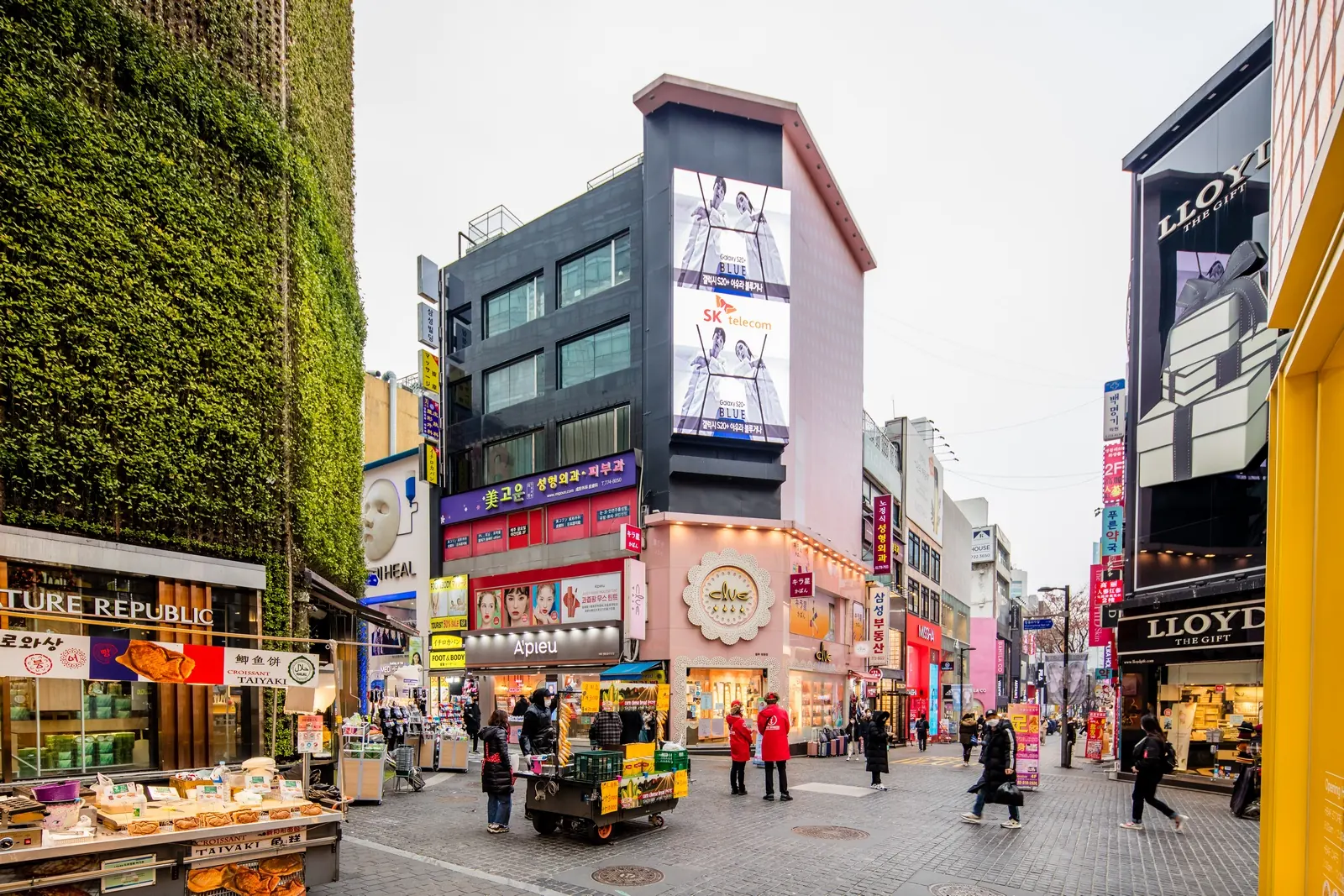
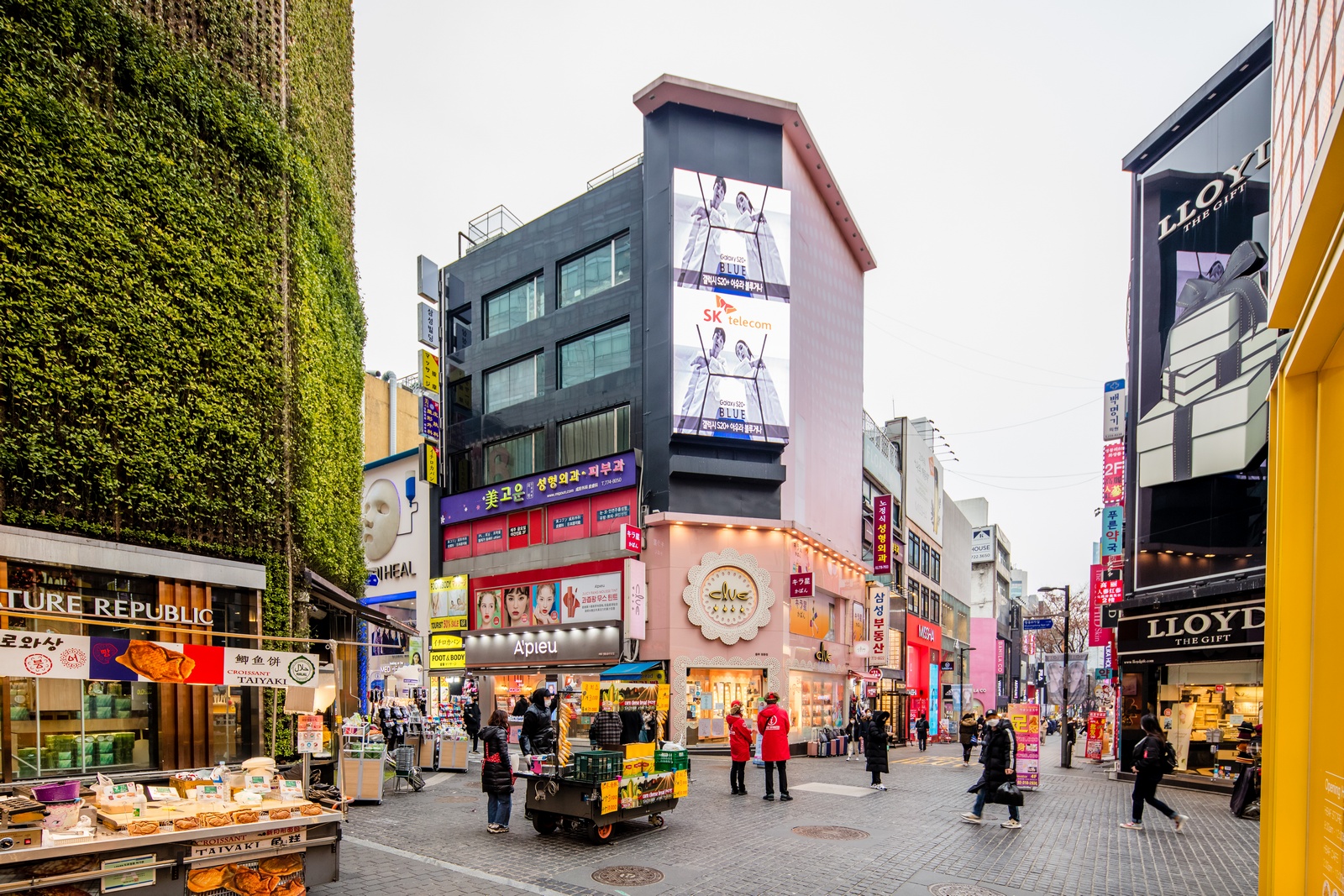
Featured A — Myeongdong Kyoja (Bib Gourmand kalguksu)
Myeongdong Kyoja has held a MICHELIN Guide Bib Gourmand listing for multiple consecutive years and is the single-dish destination most consistently named when international visitors ask for a quick traditional lunch in central Seoul. The address is 29 Myeongdong 10-gil, Jung-gu — five minutes on foot from the main Myeongdong shopping intersection. The menu is intentionally short: hand-cut kalguksu (knife-cut noodle soup in a rich anchovy and chicken stock), kimchi-mandu (dumplings), kongguksu (cold soy-bean noodle soup, seasonal in summer), and bibim-guksu (spicy mixed cold noodles). The kitchen has run this menu continuously since 1966 with the same family ownership across two generations, and the consistency is the central point — the kalguksu is identifiably the same dish year after year. The dining room is large, brisk, and not romantic; the protocol is to order on entry, eat in roughly twenty minutes, and clear the table for the next group. English, Mandarin, and Japanese menus are available; staff handle international visitors competently and the universal Bib Gourmand inclusion has produced a stable multilingual service standard. Price range is roughly KRW 10,000 to KRW 15,000 per person, which makes it one of the most accessible Bib Gourmand experiences in the city. For visitors staying near the central tourist quarter, this is a thirty-minute lunch that punches well above its price. The recommended order for a first-time visitor is a single bowl of kalguksu plus a half-portion of mandu, which is enough food without being heavy enough to disrupt afternoon plans. Hours run 10:30 to 21:30 daily and the queue at lunch on Saturdays can stretch to twenty minutes; weekday lunches usually allow walk-in seating within ten minutes.
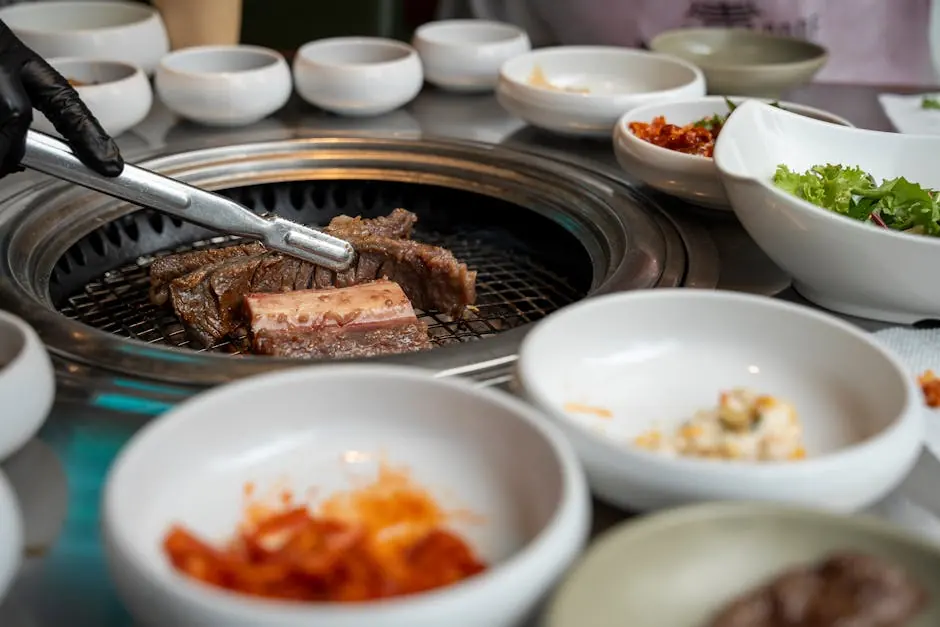
Featured B — Hadongkwan (1939 gomtang institution)
Hadongkwan is one of Seoul's oldest continuously operating Korean restaurants and the canonical gomtang reference. Open since 1939 at 12 Myeongdong 9-gil, Jung-gu, the kitchen serves a tightly defined menu centred on gomtang — a clear beef-bone soup simmered over many hours with sliced brisket, served alongside rice and kimchi. Hadongkwan has held a MICHELIN Guide Bib Gourmand listing in recent guides and is closed by 16:00 daily; visitors must plan an early lunch rather than a dinner, which is a structural feature of the restaurant's traditional working pattern rather than an oversight. The dining room is utilitarian and the service is brisk; this is not an atmospheric meal but a benchmark dish in its purest, least-adorned form. Customers typically order at the counter and are seated quickly. The standard order is a single bowl of gomtang at the standard temperature, optionally upgraded to a larger bowl with additional brisket; first-time visitors are usually advised to leave the seasoning subtle and add the small dishes of salt and pepper to taste rather than to over-season. Price is approximately KRW 15,000 to KRW 25,000 per person. The Myeongdong location places it within a fifteen-minute walk of most central tourist hotels, and the early-closing schedule pairs naturally with an early lunch followed by an afternoon palace or Bukchon visit. Visitors who have travelled internationally specifically for Korean food typically rank Hadongkwan as the gomtang they came to find — the dish is clear, beefy, restorative, and pointedly unadorned in a way that reflects its 1939 working-restaurant origins. English menus are available and the staff can handle basic English ordering.
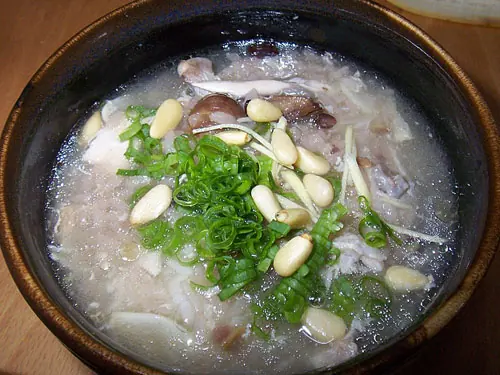

Featured C — Tosokchon Samgyetang (presidents' favourite samgyetang)
Tosokchon, at 5 Jahamun-ro 5-gil, Jongno-gu, is the most internationally recognised samgyetang restaurant in Korea. The dish — ginseng chicken soup, a whole young chicken stuffed with sticky rice, jujubes, garlic cloves, and Korean ginseng, simmered in clear broth — is the canonical Korean stamina meal, particularly favoured in the three hot summer months when Koreans traditionally eat hot soup to balance the body's heat regulation. Tosokchon's reputation rests on long-running consistency, a hanok-style dining hall five minutes on foot from Gyeongbokgung Palace, and an oft-repeated story of former Korean presidents stopping in for the dish across multiple administrations. The interior is split across several traditional rooms with floor seating, with table seating available for visitors who prefer it. The standard order is the basic samgyetang; a higher-tier version with whole Korean ginseng root costs roughly twice as much and is recommended for visitors specifically interested in the ginseng dimension. The accompanying ginseng liquor (insam-ju) is served in small cups and is optional. English, Japanese, and Mandarin menus and staff are available, with multilingual signage at the entrance and on the menu. Price runs roughly KRW 19,000 to KRW 25,000 per person for the standard preparation; the premium ginseng version is approximately KRW 30,000 to KRW 35,000. Hours are 10:00 to 22:00. The location pairs naturally with a half-day Gyeongbokgung and Bukchon Hanok Village itinerary, which is the conventional rest-day combination for international medical-tourism visitors. Expect a queue at lunch on weekends — thirty to forty-five minutes during peak hours — and at any time during the bok-day (mid-summer stamina-eating tradition) cycle in July and August; midweek visits outside these windows are comfortable and usually allow walk-in seating within fifteen minutes.
Featured D — Imun Seolnongtang (Seoul's oldest restaurant, est. 1904)
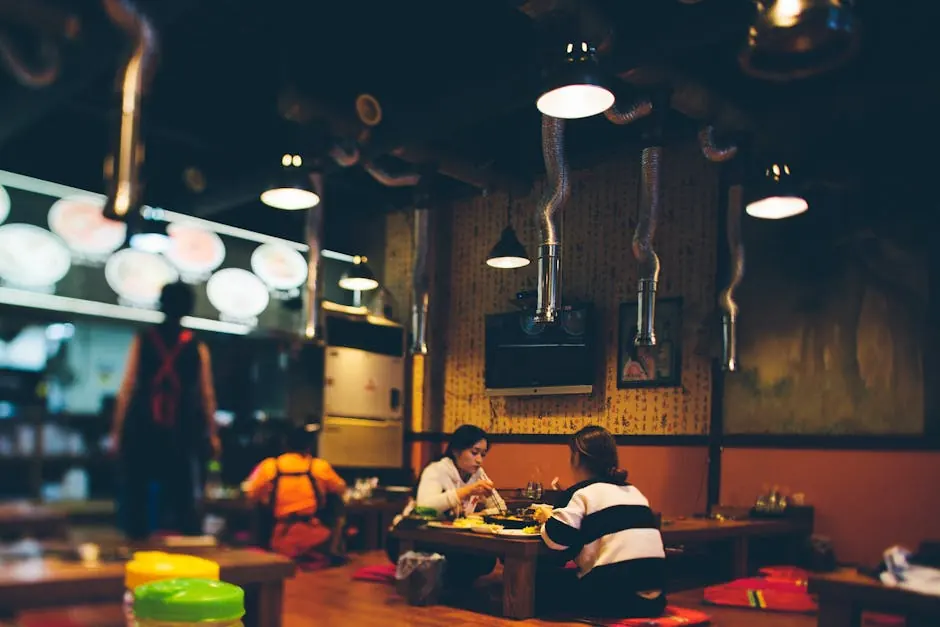
Imun Seolnongtang at 38-13 Ujeongguk-ro, Jongno-gu, has been continuously serving seolleongtang — a milky-white ox-bone soup simmered for many hours with sliced beef, served with rice — since 1904, making it the oldest continuously operating restaurant in Seoul and over 120 years old as of 2026. The Seoul Metropolitan Government has formally designated Imun Seolnongtang as part of the Seoul Future Heritage register, a programme that recognises cultural-heritage businesses worth preserving and which carries no commercial obligation but a meaningful endorsement of historical continuity. The dining room is unfussy — fluorescent-lit, plastic-table-cloth, communal-table — and the menu is essentially one dish, served fast and consistent at roughly KRW 11,000 to KRW 14,000 per bowl. The protocol is to add salt, pepper, and chopped scallion to taste from the small dishes on the table, and to pair the soup with the side of kimchi and pickled radish. The recommended approach for a first-time visitor is to taste the broth in its unseasoned form first and add salt incrementally; the broth's neutrality is the central feature, not a flaw. Open 08:00 to 21:00, closed Sundays. The restaurant sits in the Insadong-adjacent Ujeongguk-ro corridor — three minutes' walk from the Insadong main street — and pairs well with an Insadong gallery walk or a Jogyesa Temple visit on the same morning. The breakfast hour from 08:00 to 10:00 is one of the few traditional-restaurant breakfasts available in central Seoul and is the editorial recommendation for visitors looking for an authentic morning meal rather than a hotel breakfast. For visitors making one traditional-restaurant pilgrimage in Seoul, this is the most cleanly historical option — over twelve decades of continuous operation makes it a reference point rather than a trend visit.
Featured E — Yongsusan (royal hanjeongsik in Samcheong-dong)
Yongsusan, located at 118-3 Samcheong-dong with Samcheong-ro frontage, Jongno-gu, is the standard reference for Gaeseong-style royal hanjeongsik in Seoul. The hanjeongsik format is a multi-course traditional meal — typically twelve to twenty small dishes served simultaneously around a central protein course — and Yongsusan's interpretation specifically draws on the cuisine of Gaeseong, an historic Korean city now located across the inter-Korean border that retained a distinctive royal-court culinary tradition through the late Joseon period. The Gaeseong style is characterised by clean preparation, balanced seasoning, and a particular attention to vegetable composition, with bossam-kimchi (cabbage-wrapped kimchi) as one of its signature elements. The Samcheong-dong location is in a restored hanok with several private rooms behind sliding doors, suitable for slower business meals, family gatherings, or longer rest-day lunches where visitors want to occupy a room rather than rush a meal. The course menu is structured in three to four tiers, with the entry tier covering the canonical Gaeseong dishes and the upper tiers adding more elaborate preparations including bossam-kimchi service. English, Korean, Japanese, and Mandarin support is available; the staff can guide visitors through the course explanation if requested. Price runs roughly KRW 45,000 to KRW 130,000 per person depending on the chosen course tier, with most visitors selecting the mid-tier at approximately KRW 65,000. Hours are 11:30 to 22:00 daily. Reservations are recommended for dinner and for weekend lunch, particularly if a private room is preferred. The Samcheong-dong neighbourhood pairs naturally with a Bukchon Hanok Village walk before or after the meal, and the restaurant is approximately ten minutes by taxi from Gyeongbokgung Palace. For visitors wanting a single full traditional meal in Seoul rather than a series of single-dish stops, this is the editorial recommendation.
Featured F — Jihwaja (royal court cuisine, intangible cultural heritage)
Jihwaja, at 126 Pirun-daero in the Buam-dong corner of Jongno-gu, is operated under the direct lineage of Han Bok-ryeo, a designated holder of Korea's National Intangible Cultural Heritage No. 38 for royal court cuisine (Joseon dynasty royal kitchen tradition). This designation is the highest formal cultural-heritage recognition for a Korean culinary tradition and carries with it both a research mandate and a teaching responsibility — Han Bok-ryeo's institute has trained the small population of Korean chefs working in the documented royal court tradition over the past several decades. The restaurant runs a tightly limited reservation system, with lunch served 12:00 to 15:00 and dinner 18:00 to 21:00, and serves a multi-course traditional menu in the format documented historically for the Joseon court — gujeolpan (nine-section platter), sinseollo (royal hot pot), juyeop-jjim (steamed dishes), and seasonal vegetable preparations specific to the court's records. The dining experience is structured: each course is plated, sequenced, and explained, with explicit reference to the historical record and to the period in which the dish was originally documented. The room itself is set as a traditional Korean dining space with low tables and floor seating, although table seating can be arranged for visitors who require it. Price ranges roughly KRW 80,000 to KRW 160,000 per person depending on course tier; the upper tiers include the sinseollo course, which is one of the most ceremonial dishes in the Korean culinary canon. English, Korean, and Japanese support is available. Reservations are essentially mandatory and often need to be made several days to a week in advance, particularly for weekend service. The Buam-dong location is roughly fifteen minutes by taxi from central Seoul and is in a quiet residential pocket north-west of Gyeongbokgung. For visitors whose interest in Korean cuisine extends to the historical and the ceremonial rather than the casual — and who have the budget, time, and reservation discipline to plan ahead — Jihwaja is the editorial standard for royal-cuisine experience in Seoul.
Featured G — Mokmyeoksanbang (Namsan-side traditional bibimbap)
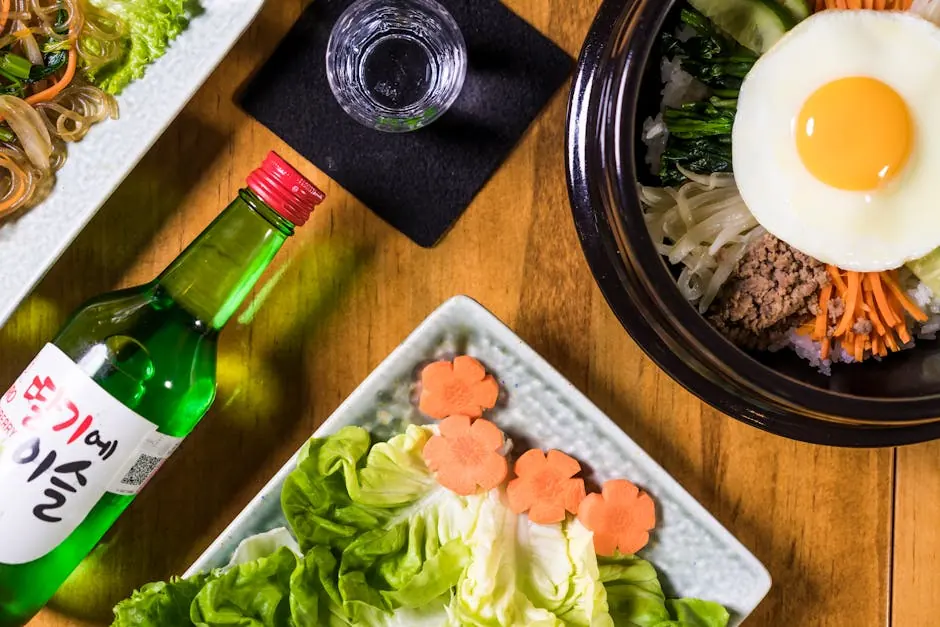
Mokmyeoksanbang occupies a converted Korean-traditional building on the southern foothills of Namsan, at 71 Toegye-ro 20-gil, Jung-gu. The restaurant specialises in bibimbap and a few seasonal side dishes, served in a quiet single-floor room with low tables, a small outdoor courtyard during warm months, and views of the wooded Namsan slope behind the building. The dish itself is the conventional mixed-rice bowl — warm rice, seasoned vegetables in five colour-coded preparations, a fried egg, gochujang, and a small drizzle of sesame oil — but the room and the Namsan-foothill setting elevate what would otherwise be a routine lunch into a slower atmospheric meal. The seasonal side dishes rotate through the year: namul varieties in spring, doenjang-jjigae and fresh greens in summer, kimchi-jjigae and chestnut additions in autumn, and root-vegetable jeon in winter. The restaurant is frequently recommended by overseas Seoul travel guides — Time Out Seoul, the Visit Seoul official directory, and several international hotel concierge desks — as a quiet alternative to the busier Myeongdong tourist circuit, despite being a five-minute walk south of it. Price is roughly KRW 10,000 to KRW 15,000 per person, with English menus available. Hours are 11:00 to 20:30 with the last order at 19:30; the kitchen closes promptly. Visitors staying in the central tourist quarter can fit this into a one-hour Namsan side trip, often paired with a walk up to the Namsan cable car base station or a continuation up to N Seoul Tower for the panoramic view. The restaurant does not take reservations for parties under four; arrive a few minutes before the 11:00 opening or after 13:30 for the easiest walk-in seating.
Featured H — Pildong Myeonok (Pyongyang naengmyeon Bib Gourmand)
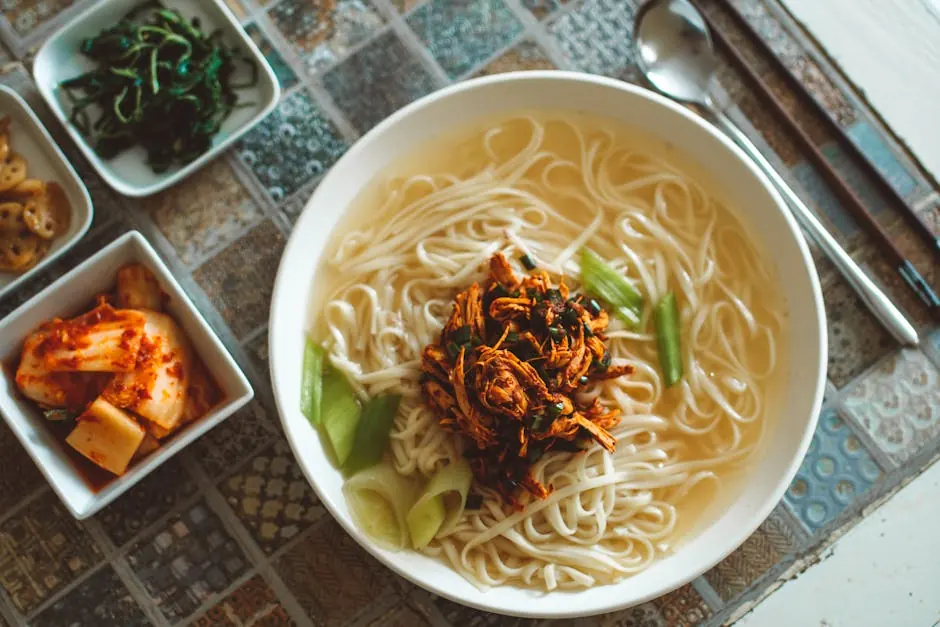
Pildong Myeonok at 26 Seoae-ro, Jung-gu, is the defining Pyongyang naengmyeon reference within the central tourist walking radius. Pyongyang naengmyeon is a cold buckwheat-noodle dish served in an icy beef broth — clear, subtle, and intentionally low in seasoning, a style that polarises new visitors and rewards repeat ones. The dish is rooted in the cuisine of the city of Pyongyang and arrived in Seoul through the post-1945 migration of cooks from the north; Pildong is one of the three or four Seoul institutions that carry the documented lineage of that migration in their kitchens. Pildong's interpretation is one of the most respected in Seoul, with a broth that is intentionally clear and a noodle that uses a high buckwheat ratio relative to wheat starch — both characteristics that distinguish Pyongyang naengmyeon from the more aggressively seasoned Hamhung style. The restaurant has held a MICHELIN Guide Bib Gourmand listing across recent guides. The dining room is large and brisk; the staff process orders fast and the table turnover is quick at peak hours. The standard order is mul-naengmyeon (the canonical cold-broth version); bibim-naengmyeon (a spicy mixed version) is also available but is not the dish Pildong is known for. The accompanying mustard packet and small jug of vinegar are intended to be added to taste — most regulars add a small amount of each rather than restraining entirely. Hours are 11:00 to 21:00 with a 15:30 to 17:00 break. Price runs roughly KRW 13,000 to KRW 18,000 per person. The restaurant is one subway stop or a fifteen-minute walk from the Myeongdong tourist quarter, near the Chungmuro and Pildong intersection, and within walking distance of the Namsangol Hanok Village. Visitors curious about the broader Seoul Pyongyang-naengmyeon canon usually pair Pildong with Eulji Myeonok (next entry) across two separate visits — the broths are recognisably different and worth comparing rather than substituting.
Featured I — Eulji Myeonok (relocated Nakwon-dong naengmyeon)
Eulji Myeonok is the long-running companion entry to Pildong Myeonok in the Seoul Pyongyang naengmyeon canon. The restaurant closed its original Euljiro location on 25 June 2022 due to the Sewoon redevelopment district and reopened in Nakwon-dong, Jongno-gu, in April 2023 — visitors using older travel-guide listings should disregard the demolished Euljiro 14-gil site entirely, as the address now refers to an empty redevelopment lot. The new location is a five-storey building with a dedicated front lot and parking, which is unusual for a Seoul traditional restaurant and reflects the family's commercial planning for the relocation. The dish profile is similar to Pildong's but with a distinct broth style, slightly heavier in mouthfeel, with a different beef-stock balance and a noodle texture that is closer to the traditional Pyongyang preparation in mouthfeel. Eulji's relationship to its dish is family-run across multiple generations and the relocation move did not involve a change in kitchen leadership; the broth and noodle recipes are recognisably continuous from the pre-2022 era. Hours are 11:00 to 21:00 with last orders at 20:30. Price runs roughly KRW 13,000 to KRW 18,000 per person. English support is limited; the menu carries photos and basic English captions, which is generally enough for the single-dish format that visitors will be ordering. The standard order is the mul-naengmyeon; a side of suyuk (boiled brisket) is the conventional pairing for visitors with larger appetites and turns the meal into a more substantial sit-down. Visitors seriously interested in comparing Pyongyang-naengmyeon styles should plan both Pildong and Eulji across separate days, with at least one day between the two visits to allow palate recovery — the differences are subtle enough that back-to-back comparison risks blurring them.
Featured J — Sanchon (Insadong temple cuisine)
Sanchon at 30 Insadong-gil, Jongno-gu, is one of Seoul's best-known temple cuisine destinations and is fully operational as of mid-2026. The kitchen runs a lotus-themed vegetarian course menu rooted in Korean Buddhist temple cooking, with an emphasis on seasonal vegetables, fermented preparations, mountain herbs, and the complete absence of meat, fish, and the five pungent vegetables (garlic, scallion, leek, chive, and asafoetida-equivalent) that the Korean Buddhist tradition treats as stimulating and therefore unsuitable for monastic practice. The dining room is set in a traditional Korean interior with low tables, floor seating, and dim atmospheric lighting; the meal is presented as a multi-course sequence with explanatory cards in English and Japanese that introduce each dish's ingredients and historical context. The course typically opens with a small starter of pickled vegetables and a clear broth, progresses through three to four main courses including a lotus-leaf rice dish and a temple-style stew, and closes with a sweet preparation of grain or fruit. Hours are 12:00 to 22:00 daily; visitors should verify before travel as restaurants in this category sometimes adjust hours seasonally, particularly during Buddhist holiday cycles. Price runs roughly KRW 35,000 to KRW 65,000 per person depending on course tier. English, Korean, and Japanese support is available, and the staff can answer questions about the temple cuisine tradition for visitors interested in its religious and culinary background. The restaurant has occasionally hosted traditional music or dance performances in its evening service across its operating decades, although the schedule has varied. For vegetarian visitors and for visitors curious about Korean Buddhist culinary tradition, Sanchon is the canonical Insadong stop and pairs naturally with an Insadong gallery and craft-shop walk before or after the meal. The location is on the main Insadong-gil pedestrian street, six minutes on foot from Anguk Station (Seoul Metro Line 3, exit 6).
How we selected this list — editorial methodology
The Visit Korea Medical editorial team built this shortlist by cross-checking three primary sources: the current MICHELIN Guide Seoul (for Bib Gourmand and starred entries), the Korea Tourism Organization's official restaurant directory at english.visitkorea.or.kr, and the Seoul Metropolitan Government's Future Heritage register at english.seoul.go.kr. We then verified each restaurant against recent Tripadvisor and Naver Place activity within the last sixty days to filter out closed, relocated, or dormant venues. Several names that appear on widely shared visitor lists have been excluded because they no longer meet our operational-verification standard — restaurants that have lost MICHELIN star status, that have closed indefinitely, or that have relocated without updating their public listings. We do not publish numerical rankings; the alphabetical Featured A through J ordering is editorial, not preference-based. The list is updated quarterly by our editorial team.
Fitting a traditional meal into a treatment trip
Most international visitors travelling to Seoul for a four-to-seven-day medical-tourism trip have one to three free meals on non-treatment days. Our editorial recommendation for first-time visitors is to anchor those meals around two clearly different formats: a single-dish institution lunch (Imun Seolnongtang, Hadongkwan, Myeongdong Kyoja, or Tosokchon) and one longer multi-course dinner (Yongsusan, Jihwaja, or Sanchon). The two formats together give a fuller view of Korean traditional cuisine than three meals of the same type. For visitors with treatments that involve facial swelling, mild redness, or post-procedure dietary guidance, we recommend confirming with the treating clinician's coordinator team what food restrictions apply in the first 48 hours. Hot spicy dishes and aggressive chewing are sometimes restricted after specific aesthetic procedures. The aftercare guide at our aftercare overview carries the general framework.
Frequently asked questions
Which of these restaurants are the most accessible for non-Korean speakers?
Myeongdong Kyoja, Tosokchon Samgyetang, Yongsusan, and Sanchon all maintain English, Japanese, and Mandarin menus with English-capable staff. Hadongkwan and Eulji Myeonok have limited English but their menus are essentially single-dish formats that translate easily. Jihwaja is the most ceremony-driven and benefits from reservation through a Korean-speaking concierge or hotel.
Do I need to reserve in advance?
Jihwaja requires reservations several days ahead — the restaurant's format depends on advance preparation. Yongsusan and Sanchon benefit from reservations on weekends and holidays. Myeongdong Kyoja, Hadongkwan, Tosokchon, Imun Seolnongtang, Mokmyeoksanbang, Pildong Myeonok, and Eulji Myeonok run a walk-in service with normal queues at peak hours but no formal reservation system.
What is hanjeongsik exactly?
Hanjeongsik is a Korean traditional set-menu format in which ten to twenty small dishes are served simultaneously around a central protein course. It evolved from royal court banquet structure and is the closest Korean parallel to a Japanese kaiseki. Yongsusan and Jihwaja are the two hanjeongsik destinations on this list.
How do I get to Tosokchon from central Seoul?
Take Seoul Metro Line 3 to Gyeongbokgung Station, exit 2, then walk five minutes north. From Myeongdong, the trip is approximately twenty minutes by metro with one transfer or fifteen minutes by taxi at roughly KRW 8,000 to KRW 12,000.
Are these restaurants suitable for vegetarian visitors?
Sanchon is fully vegetarian (Korean Buddhist temple cuisine, with no meat, fish, or pungent root vegetables). Yongsusan and Jihwaja can accommodate vegetarian visitors if notified at reservation. The other seven on this list are not vegetarian-friendly in their core format, though most have at least one side dish that meets a flexitarian standard.
Which is the best single restaurant if I only have one meal in Seoul?
The Visit Korea Medical editorial team does not publish numerical rankings. Our editorial guidance is that single-dish institutions (Imun Seolnongtang, Hadongkwan, Myeongdong Kyoja) give the cleanest historical and gastronomic signal in a one-hour lunch, while multi-course formats (Yongsusan, Jihwaja, Sanchon) give a fuller view across two to three hours of dinner.
Are these restaurants near my hotel in the central tourist quarter?
Myeongdong Kyoja and Hadongkwan are inside the central tourist quarter on foot. Mokmyeoksanbang and Pildong Myeonok are within fifteen minutes' walk. Imun Seolnongtang and Sanchon are one subway stop or a short taxi ride into Jongno-gu. Tosokchon, Yongsusan, Jihwaja, and Eulji Myeonok are short taxi rides from the central quarter, generally KRW 8,000 to KRW 15,000.
Where do I find a separate list for traditional markets, museums, and palaces?
The traditional markets list sits at our markets guide, and palace and museum coverage is on the Seoul city guide at our Seoul page. The full city-level itinerary frame is on the first-time visitor guide.